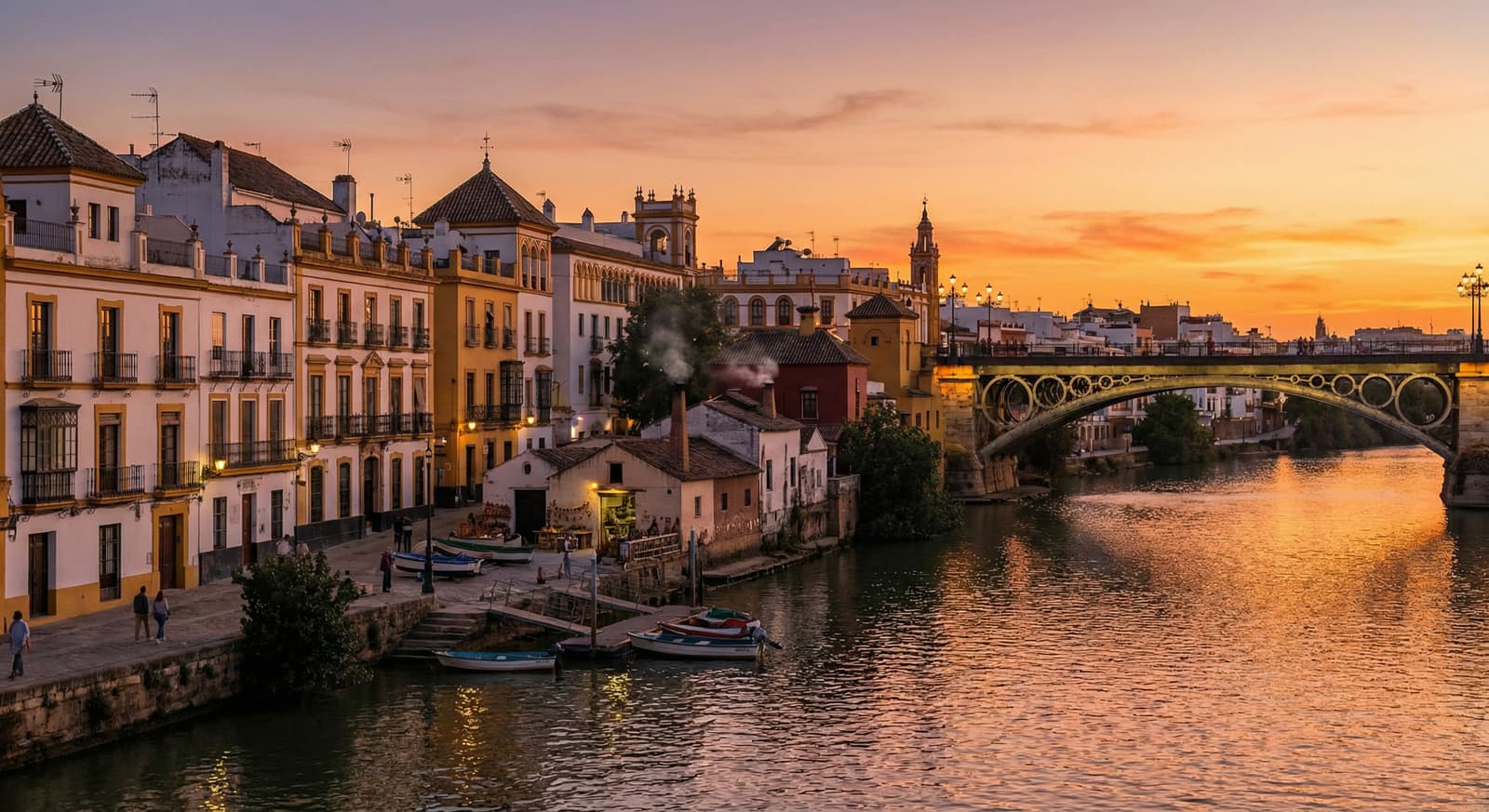
Ceramics and Seville have been intertwined for centuries. The neighbourhood of Triana, on the west bank of the Guadalquivir, has been the city’s pottery heart for generations.
Origins of ceramics in Seville
Ceramics in Seville has deep roots reaching back to the Islamic period. During the Almohad era (12th and 13th centuries), the city saw a flowering of culture and craft that left an indelible mark. Muslim potters introduced techniques such as cuerda seca, sgraffito and glazing with metallic oxides.
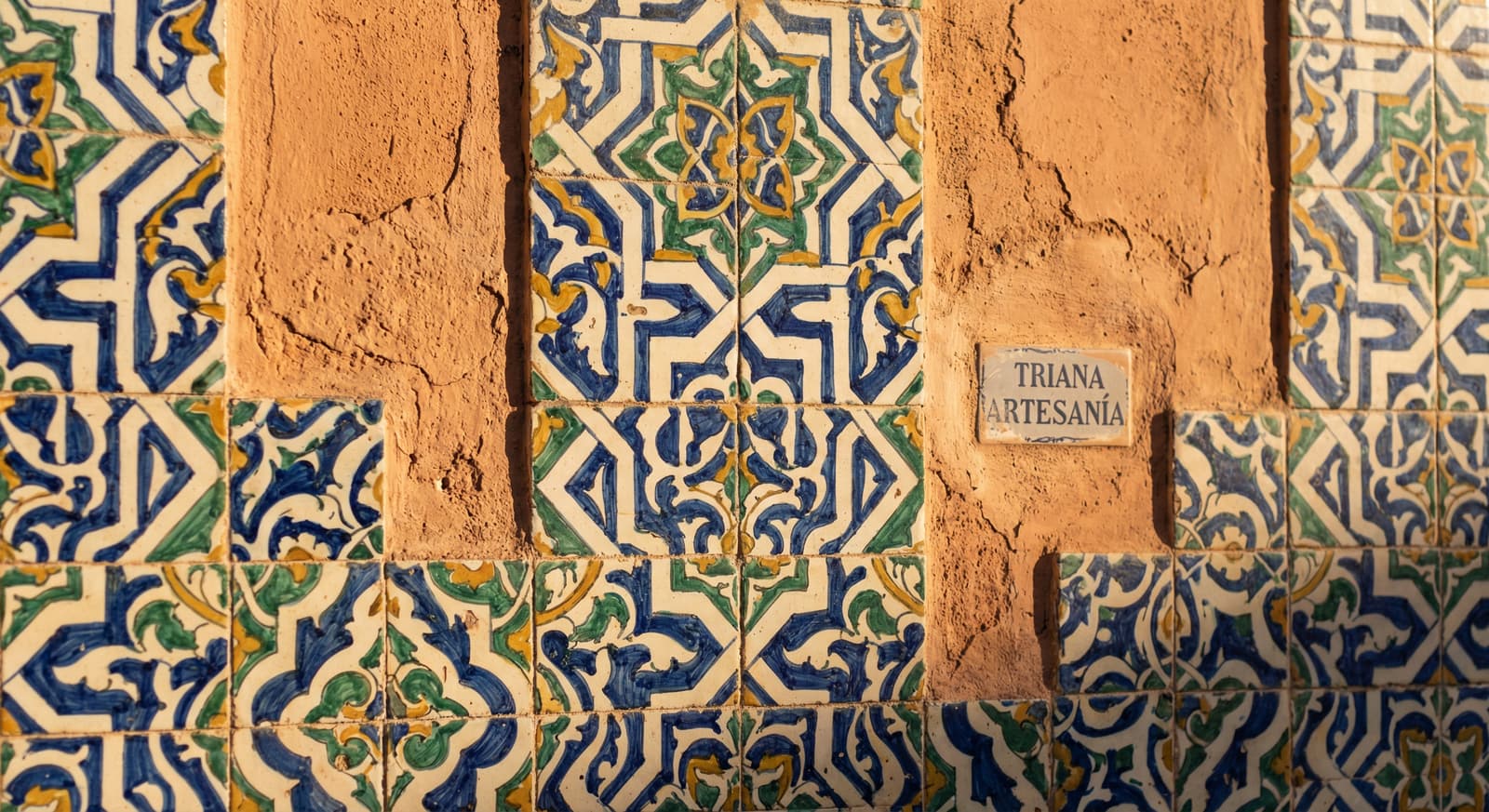
After the Reconquest, Mudéjar art kept the Islamic heritage alive and blended it with Christian influences. Tiles and decorative pieces continued to be made in workshops that passed the trade from parents to children. Seville ceramics became a visual language of its own, recognizable for geometric and floral motifs and the characteristic blues, whites, greens and yellows.
Seville potters exported their work across Andalusia, the rest of Spain and even the Americas—Triana ware influenced cities such as Puebla (Mexico) and Talavera de la Reina.
Triana: the potters’ quarter
Triana did not become the ceramics neighbourhood by chance. Proximity to the river meant quality clay could be taken from its banks. Guadalquivir mud, rich in minerals, was ideal for modelling and firing durable pieces.
Firing kilns needed large amounts of fuel and space. The streets filled with workshops. Names such as Calle Antillano Campos, Calle Alfarería or Calle Pureza still echo that potting tradition today.
Historic kilns were brick structures reaching temperatures of up to 1000°C. Potters worked as families, passing techniques down the generations. In the 18th and 19th centuries hundreds of potteries produced jars, pitchers, tiles and tableware. The smell of clay and kiln smoke was so characteristic that visitors wrote about it in their chronicles.
Centuries of tradition
From the Almohad period to today, Triana ceramics has survived wars, industrial revolutions and fashions. Its essence remains intact.
Traditional Seville techniques
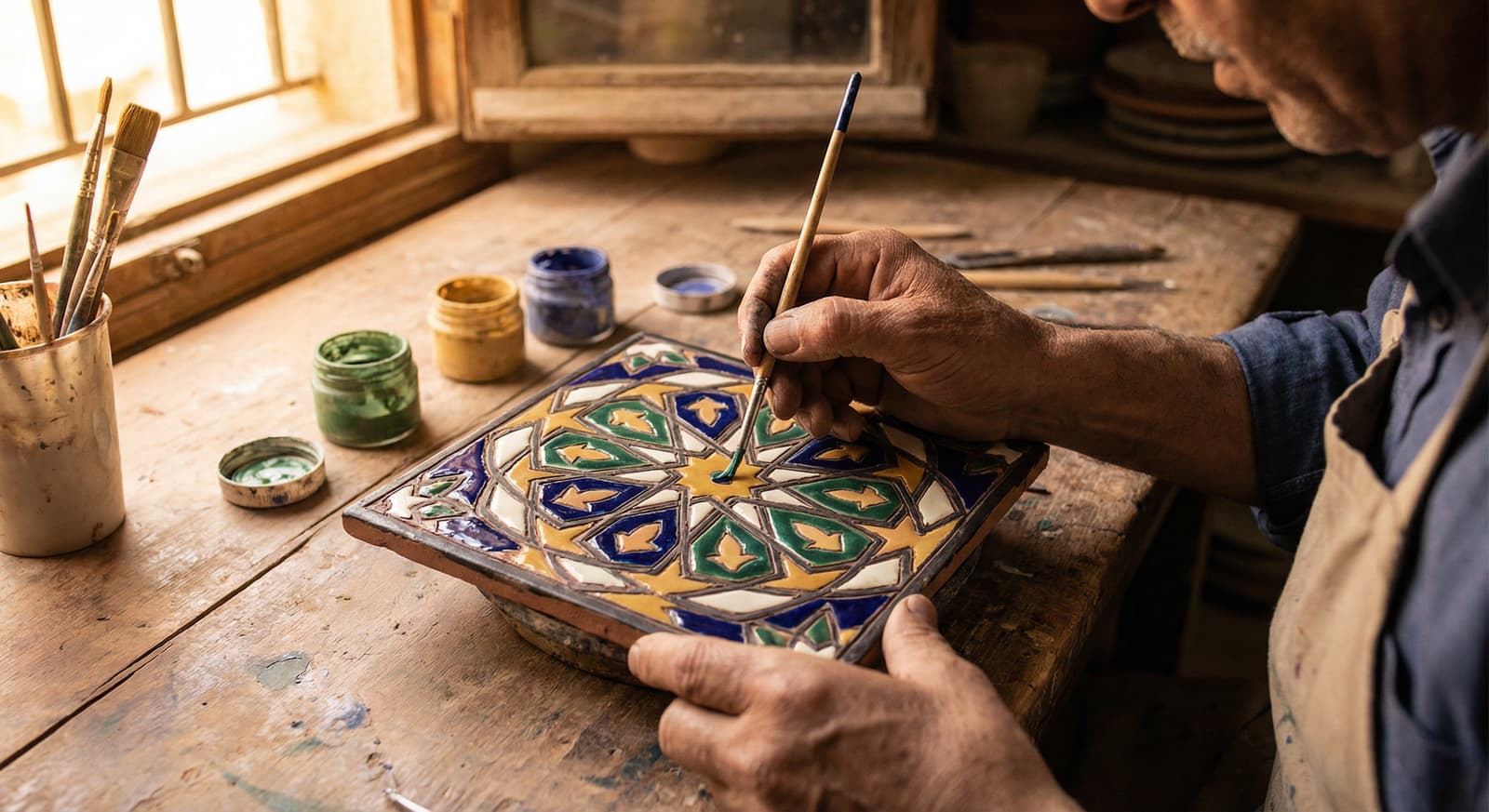
Cuerda seca means drawing lines with a mix of grease and manganese oxide so glazes do not run together in the kiln. The result is crisp motifs with dark outlines around each colour. This technique of Islamic origin is still practised in workshops like ours.
Arista uses moulds that create small walls between colours. Sgraffito means scratching through a slip layer to create relief drawings. Maiolica lets pigments be applied directly to the surface—it is the technique we use in our painting experiences.
Seville ceramics in architecture
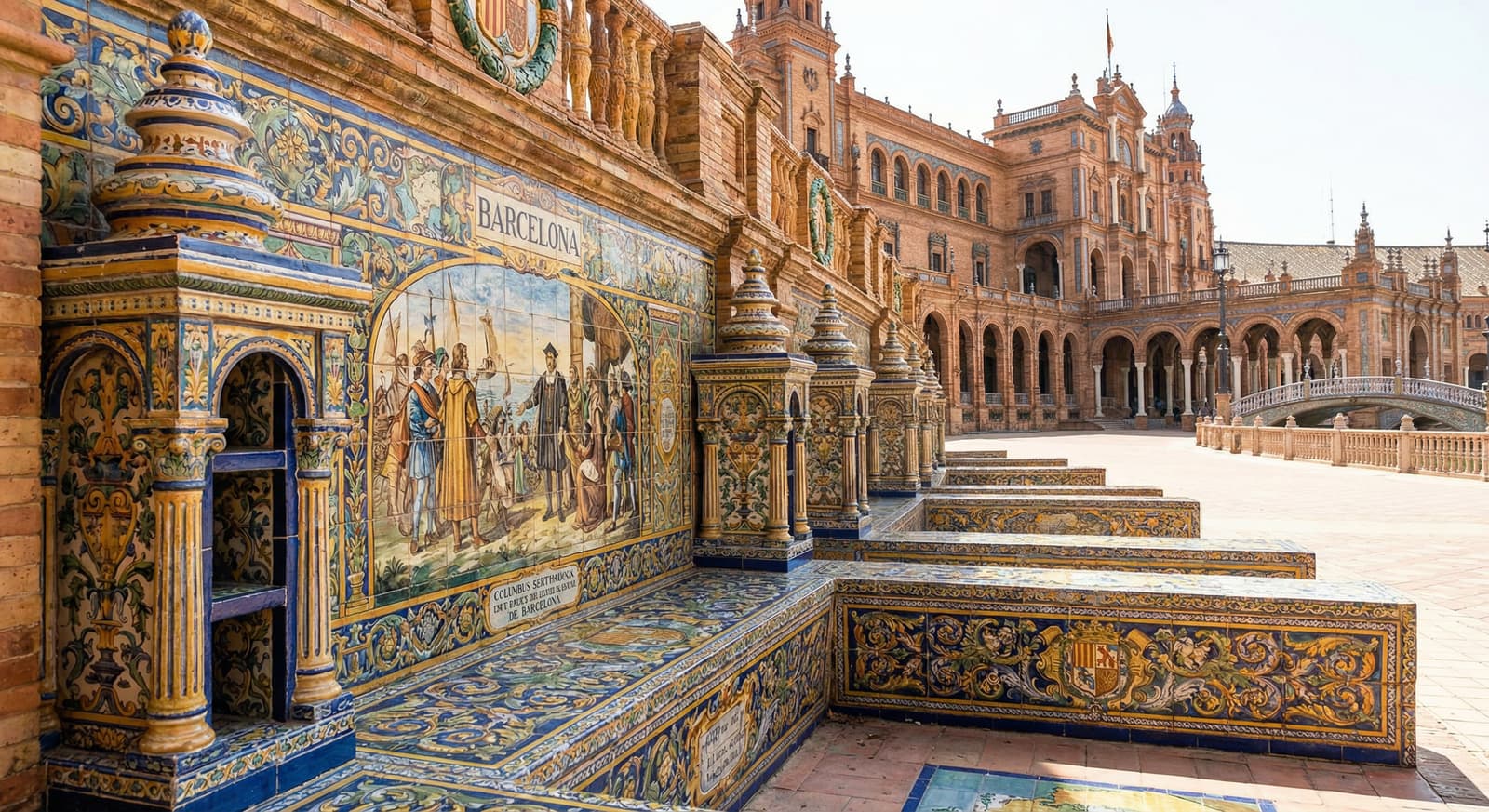
Plaza de España, built for the 1929 Ibero-American Exposition, is one of the most spectacular examples: its benches depict Spain’s provinces with hand-painted tiles that tell their history and geography. The building is a tribute to Triana ceramics.
The Real Alcázar preserves rooms and courtyards clad in tiles that blend Islamic geometric patterns with figurative scenes. Churches show ceramic altarpieces that weave pottery into sacred architecture.
Today ceramics still shapes contemporary architecture: restaurants, hotels and homes use ceramic murals to give spaces personality. The tradition reinvents itself without losing its soul.
Arte y Pureza: carrying on the tradition
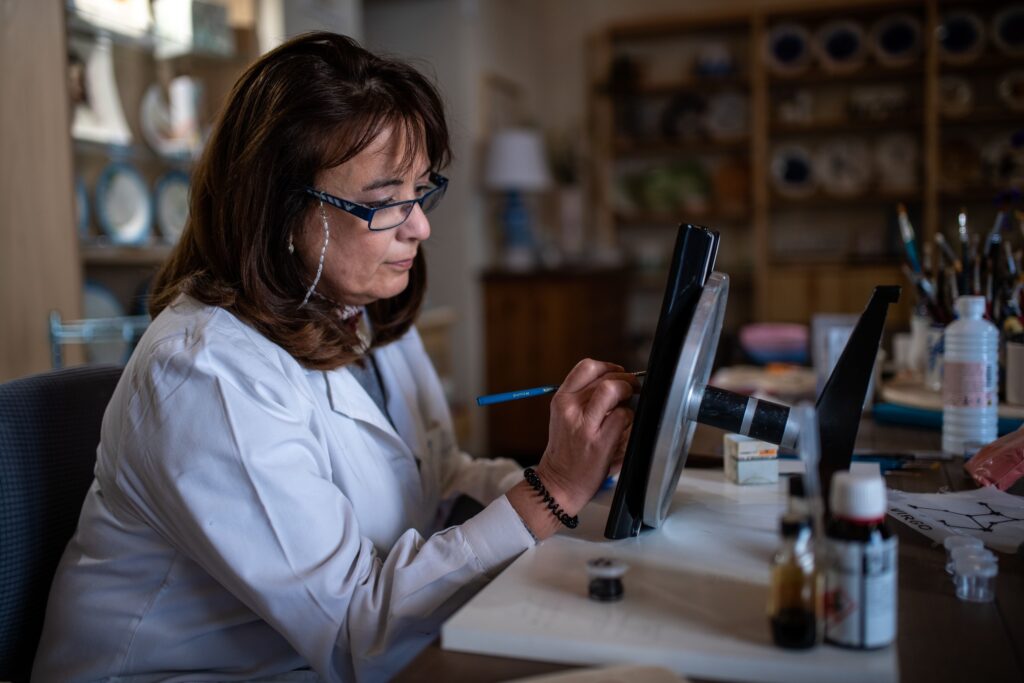
In our workshop at 72 Calle Pureza in Triana we keep the neighbourhood’s ceramic heritage alive. We are not a museum: we are a place of making and learning where more than 400 people have learned hand modelling, painting and decoration.
If the history of Triana ceramics interests you, we invite you to live it first hand—paint a mug, model a bowl or decorate a tile. The tradition is still here.